
Product arrived a couple of days after ordering I got my results with in 24 hours of posting. Easy to use kit with useful step by step instructions. Much nicer experience than in clinic testing
Russel W.
Verified Customer
This is an excellent product. A very thorough process that’s well explained and easy enough to use at home. Suited my busy lifestyle and allowed me the freedom to do this in my own time. The team were incredibly helpful and the results at the end were very detailed and well explained meaning I could easily understand them.
Tristan M.
Verified Customer
Malebox is a slick and innovative company, and my experience was fantastic. Clear instructions, great packaging and efficient results. Would highly recommend for anyone interested in their fertility!
Frank L.
Verified Customer
Prompt and super reliable service!
Nickel R.
Verified Customer
Gaz W.
Verified Customer
Fantastic overall experience. Instructions were easy to follow, and the follow up consultation with Jade was very informative and helpful. Highly highly recommend!
Matt S.
Verified Customer
Why don't guys think of this?? I never really thought about my fertility, my wife and I are thinking about kids, so we track her fertility but never even thought about mine. After a quick Google I found Malebox, 100% worth every penny. The process was really easy and the consultation was great to go through all my results. Would recommend to a friend.
Oli P.
Verified Customer
Great customer service. Product very easy and user friendly. The team are very passionate about what they do and leaders in the field. Product accurate, reliable and goes in to great depth with consultant review and analysis.
Home collection. Lab analysis. Clear next steps.
Every test is analysed by qualified clinicians (HCPC registered) following WHO guidelines. Clinical-grade results you can trust.
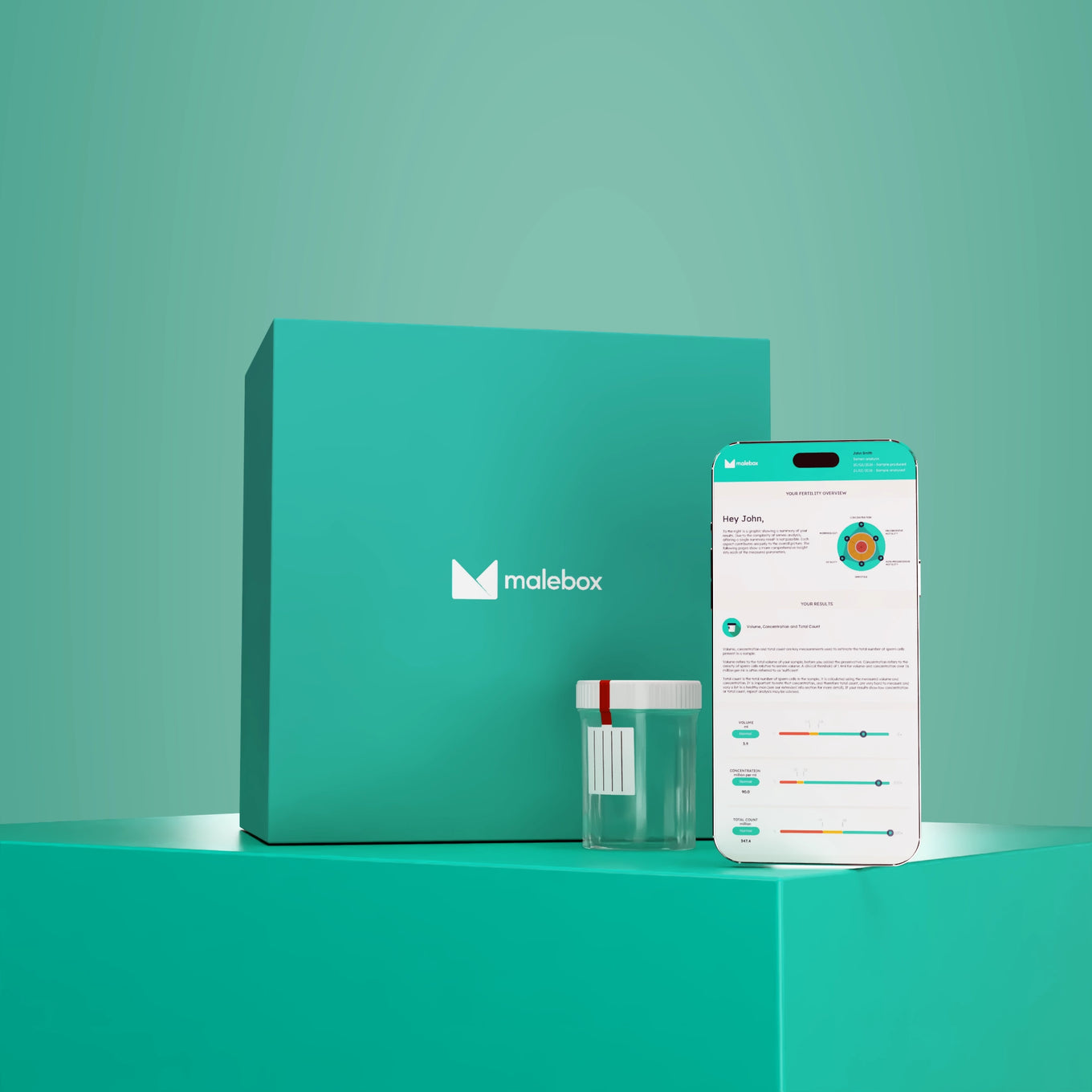
Malebox allows you to send your sperm sample to our accredited partner lab for analysis. You then have a video consultation with a fertility expert, who will walk you through your results and provide personalised advice to improve your fertility health.
This package is recommended for couples who have been trying to conceive for 12 months as per the NICE guidelines.
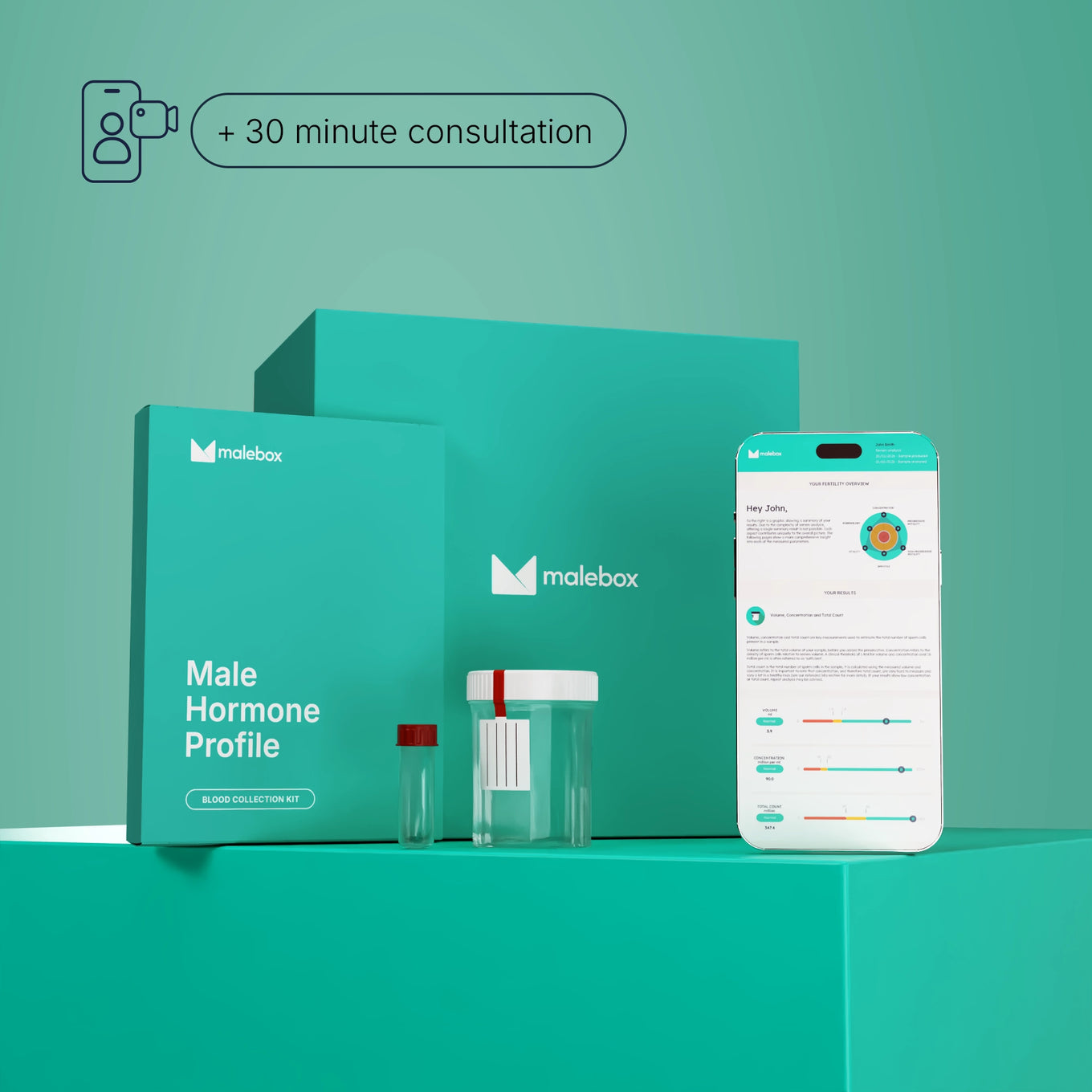
N.B. This package arrives as two separate kits. Results are delivered via video consultation once both tests are completed and analysed.
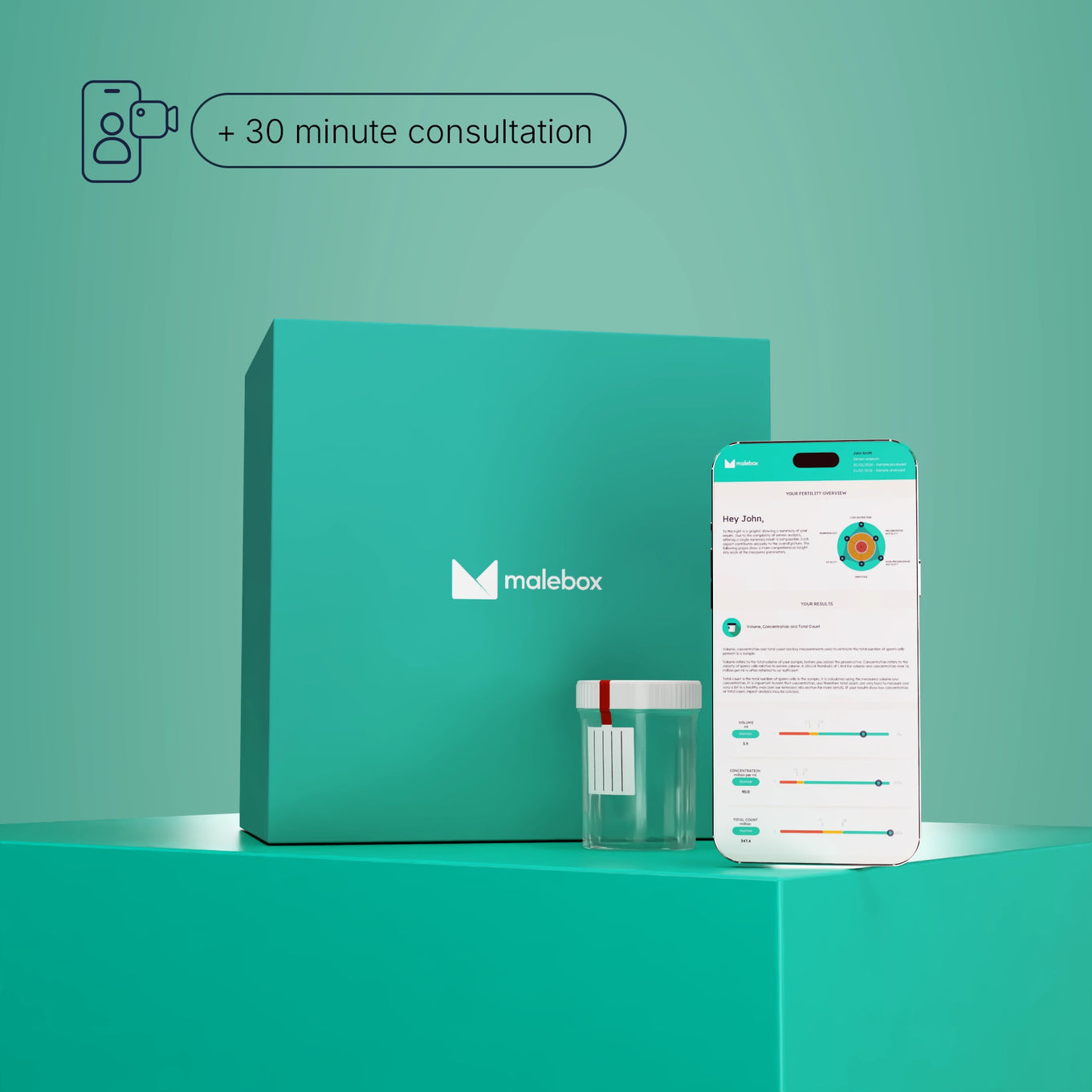
A 30-minute video call with an NMC registered fertility nurse. Get personalised guidance on your fertility health and a clear plan for next steps, from home.
Every Malebox at Home Semen Analysis Kit is analysed by a HCPC registered clinician following WHO guidelines.
Consultation
Your results will be shared via a video consultation with a fertility specialist. You'll receive tailored advice for the next steps in your fertility journey.
Report
After your consultation, you'll receive a clear, comprehensive fertility report covering the parameters of your semen analysis. It's easy to understand, no medical background needed.
Sperm Testing, made simple
Easy-To-Read Semen Analysis Report
Your Malebox report breaks down the parameters of your semen analysis - volume, concentration, motility, morphology and more - with each result compared against WHO reference ranges. It's designed to be understood without a medical degree, so you're never left wondering what it means for you.
youtube
Why Choose Malebox?
Understand Your [img1] From [img2]With Expert [img3]
Most men have no idea what their sperm count actually is, or what the numbers on a semen analysis report even mean. There is no single magic figure that defines "normal", and the benchmark used by UK fertility labs is more nuanced than a pass or fail. This guide breaks down the four key parameters measured in a semen analysis, the WHO 6th edition reference values currently used across the UK, and what a result above or below those values actually tells you, so you can read your results with confidence rather than confusion.
What you eat has a measurable impact on sperm quality. From Mediterranean-style eating to specific nutrients like zinc, folate, and omega-3, here's what the research actually says about diet and sperm health, and the practical changes worth making.
Stress is one of the most overlooked factors in male fertility. Here is what the science says about how chronic stress affects sperm count, motility, and DNA quality, and what you can do about it.
Most pre-conception checklists focus on her. But male factors are involved in roughly half of all conception difficulties, and a sperm check before you start trying takes that uncertainty off the table. Here's what a semen analysis measures, when to do it, and what your results actually mean.
Six months of trying to conceive and no positive test. It's a frustrating place to be - and a completely understandable one to want answers from. The good news: at six months, most couples are still within the statistically normal range. But that doesn't mean you have to just wait and see. There are practical steps worth taking now, starting with the one that's most often overlooked - checking sperm health.
Sperm health is influenced by far more than genetics or age alone. Daily lifestyle choices including how men exercise, fuel their bodies, and use gym or performance supplements play a significant role in reproductive health. Understanding how exercise and nutrition affect sperm health empowers men to make informed decisions that support both fertility and long-term wellbeing.
What do we mean by sperm health?
Sperm health refers to the overall quality and function of sperm, commonly assessed through a semen analysis. Key parameters include:
Count: The number of sperm present
Motility: How effectively sperm move, which is essential for fertilisation
Morphology: The shape and structure of sperm
These parameters are sensitive to lifestyle factors, particularly physical activity levels, nutritional status, and supplement use.
Exercise and sperm health: finding the right balance
Regular physical activity is strongly associated with better overall health, and sperm health is no exception. Moderate, consistent exercise has been linked to improved sperm count and motility, likely due to better hormone regulation, improved circulation, and reduced oxidative stress.
However, more is not always better. Excessive or very intense training without adequate recovery may negatively affect sperm parameters. High training loads can increase physiological stress, disrupt hormone balance, and contribute to fatigue and inflammation, all of which may impact semen quality.
What the evidence suggests:
Moderate resistance training and aerobic exercise are associated with healthier semen parameters
Overtraining, particularly endurance training without recovery, may be linked to reduced sperm count and motility
Adequate sleep and rest days are essential for recovery and reproductive health
Gym supplements: helpful or harmful?
Gym and performance supplements are widely used to enhance muscle growth, endurance, and recovery. While some supplements may support overall health, others can pose risks to sperm health, especially when used excessively or without professional guidance.
Potential concerns include:
Anabolic steroids and prohormones: Strongly associated with reduced sperm production and testicular suppression
Unregulated supplements: Some products may contain undeclared hormones or stimulants
High-dose stimulants: Excess caffeine and stimulant blends may increase stress responses and disrupt hormonal balance
Men using supplements for performance should be aware that “natural” does not always mean safe, particularly for reproductive health.
Nutrition and sperm health
Nutrition plays a foundational role in sperm production and function. Diets that support metabolic health, hormone balance, and antioxidant defences are consistently associated with better semen quality.
Key nutrients linked with improved sperm parameters include:
Zinc: Important for testosterone production and sperm development
Selenium: Supports sperm motility and overall reproductive function
Omega-3 fatty acids: Associated with improved sperm movement and structure
Folate: Plays a role in cell division and overall reproductive health
Vitamins C and E: Support antioxidant defences and sperm function
Men who train regularly may have higher nutritional requirements, making balanced intake particularly important.
Protein powders and amino acids
Protein supplementation is common among men who exercise frequently. When used appropriately, high-quality protein powders (such as whey or plant-based proteins) are generally considered safe and can support muscle recovery without negatively affecting sperm health.
Certain amino acids, including L-carnitine and L-arginine, have been studied for their potential role in supporting sperm motility and overall semen quality. As with all supplements, dosing and quality matter.
Practical tips for supporting sperm health while training
Train consistently but avoid chronic overtraining
Prioritise recovery, sleep, and rest days
Choose third-party tested supplements to reduce contamination risk
Avoid anabolic steroids and hormone-altering products
Focus on a nutrient-dense diet alongside supplementation
Limit excessive caffeine and stimulant-heavy pre-workouts
In summary
Exercise and nutrition can be powerful tools for improving sperm health when approached thoughtfully. Moderate training, adequate recovery, and evidence-based supplementation support both reproductive health and physical performance.
Men who train regularly or use gym supplements should consider sperm health as part of their overall wellness strategy. With the right balance of exercise, nutrition, and informed supplement use, it’s possible to support fertility while still achieving fitness goals.
Sperm health isn’t just about reproduction, it’s a reflection of how well the body is functioning as a whole.
Reference list :
PubMed — Influence of Physical Activity on Male FertilityScientific summary of exercise intensity and sperm quality:https://pubmed.ncbi.nlm.nih.gov/35415898/
PMC — Effectiveness of Exercise Interventions on Sperm QualityReview of exercise intensity and seminal parameter changes:https://pmc.ncbi.nlm.nih.gov/articles/PMC11913713/
European Fertility Society — Nutrition & Supplements for Male FertilityEvidence-based overview of dietary and supplement support for sperm health:https://www.europeanfertilitysociety.com/nutrition-supplements-for-male-fertility-and-sperm-health/
PMC — Effect of Nutrients and Dietary Supplements on Sperm QualityMeta-analysis showing nutrients linked to improved sperm parameters:https://pmc.ncbi.nlm.nih.gov/articles/PMC6247182/
MDPI (Nutrients) — Dietary Supplements and Male InfertilitySystematic review of supplement effects on sperm count, motility, morphology:https://www.mdpi.com/2072-6643/17/10/1710
Sports Medicine — Impact of Endurance Exercise on Semen QualityReview of how various exercise intensities affect semen parameters:https://sportsmedicine-open.springeropen.com/articles/10.1186/s40798-024-00739-z
Middle East Fertility Society Journal — Moderate Exercise & Semen QualityStudy showing moderate activity improves antioxidant status and sperm parameters:https://mefj.springeropen.com/articles/10.1186/s43043-025-00233-w
Healthline — How to Boost Male FertilityPractical overview of diet, lifestyle, and nutrients linked to sperm health:https://www.healthline.com/health/boost-male-fertility-sperm-count
British Fertility Society — Male Factor FertilityUK-based clinical resource explaining male infertility causes, diagnosis, and management:https://www.britishfertilitysociety.org.uk/information-hub/male-factor/